

A Walk of Realization
A striking opportunity came my way recently! Tentgram, an outdoor recreational center, featured me in its three-day yoga retreat program. Since the confirmation of the event, my excitement had been at its peak—not just because of the nature walk I was to lead but also because of its location: Munnar!
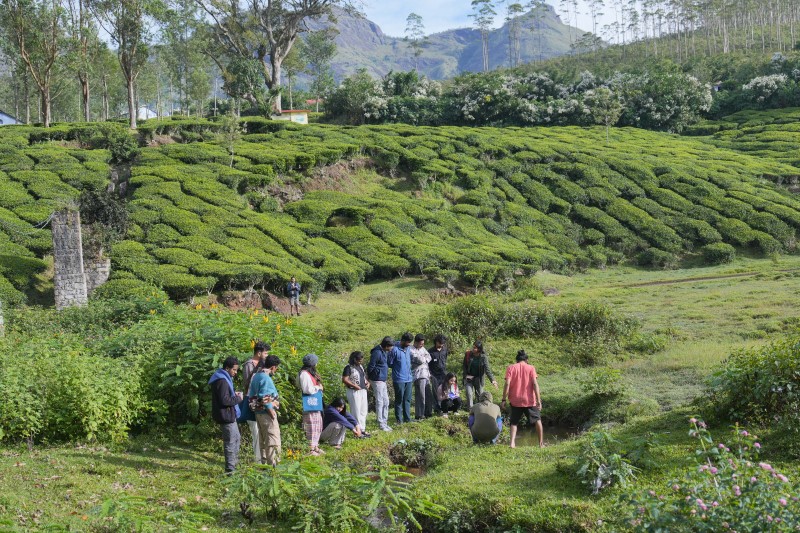
Nestled in the Western Ghats, Munnar, meaning "Three Rivers," is a breathtaking hill station where the rivers Muthirapuzha, Nallathanni, and Kundala converge. The landscape is adorned with unique montane grasslands and thick shola forests tucked into the mountain folds These forest patches are biodiversity hotspots, home to creatures found nowhere else in the world! Anamudi Peak in Munnar, standing at 2,695 meters (8,842 feet) above sea level, is the tallest peak in South India and the Western Ghats. Many of Munnar's mountain tops, rising above 2,000 meters, serve as the sources of mighty rivers like the Periyar, Chalakudypuzha, Pambar, etc. These rivers weave tales of sustenance and beauty as they journey through Kerala and Tamil Nadu. To me, Munnar has always seemed like a piece of a fairytale.
Hoping to spend three days immersed in this biodiversity haven, I took a shared jeep from Munnar town to Suryanelli, where the Tentgram property was located. The property was about 1.5 kilometers from the small Suryanelli town, a place with just a handful of tea shops and essential stores. I got down, admired the towering Kolukkumalai and Meeshapulimalai mountains surrounding the town, and made my way to my destination. The Tentgram site, once an old British hospital, had been thoughtfully renovated without losing its colonial charm.
On the first morning, I woke up to the calls of birds and rushed outside with my binoculars and camera, eager to start the day with a productive nature walk. The bubbling call of the Indian Scimitar Babbler (locally called "Cholakuduvan," meaning the one who makes the kudu-udu-udu-udu call in a chola or evergreen forest) echoed in the distance. Excited, I walked around, but I could only spot fewer than ten bird species—mostly house crows and red-whiskered bulbuls dominating the scene! Despite my efforts to locate the babbler calling from a dense patch of trees, the sprawling tea estates before me seemed to drown out its presence.
Before taking the guests on the nature walk, the organizers and I did a recce, exploring multiple trails under the harsh sun, and searching for a path that still held some of the forest's original charm. The reality, however, was disheartening. Tea estates stretched endlessly, with eucalyptus-planted grasslands in between. Along the roadsides, invasive plants like lantana and Crofton weed battled each other to dominate the open spaces. It was evident that this landscape, once brimming with life, had been altered beyond recognition.
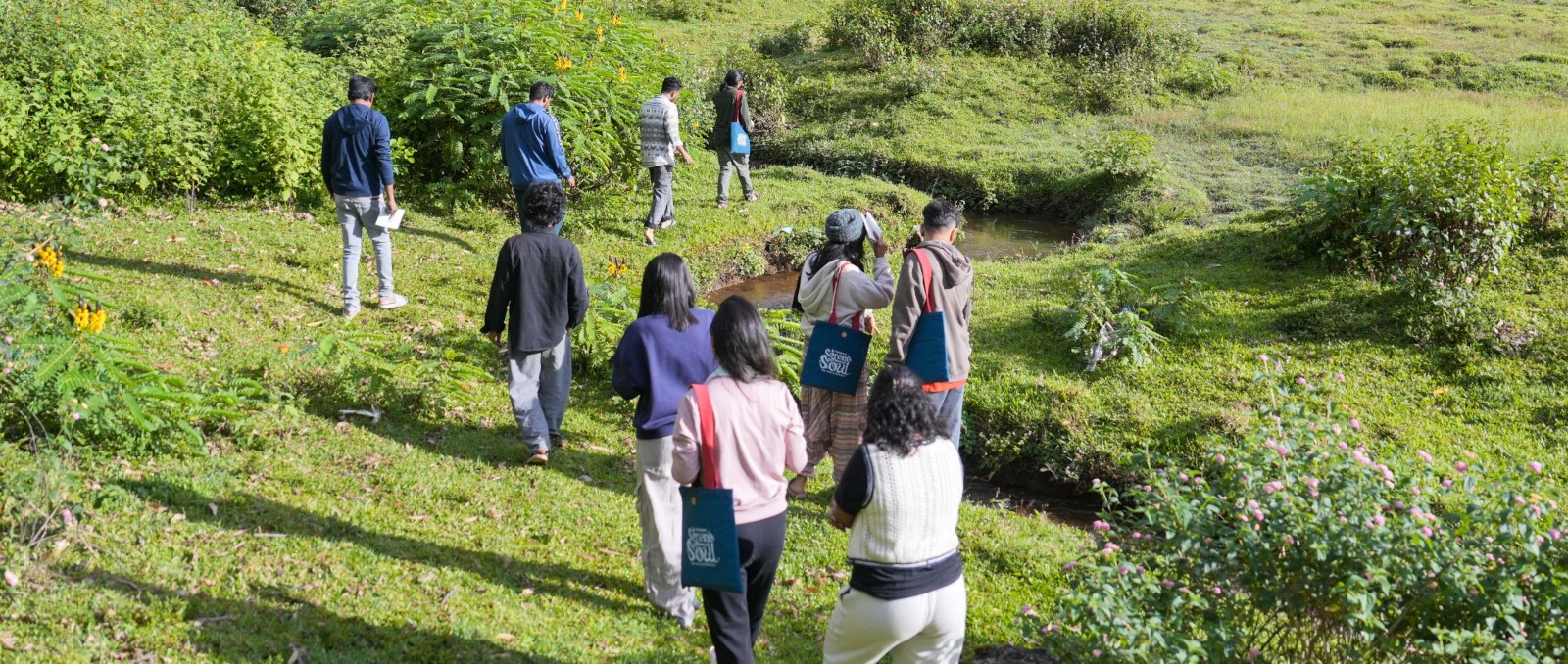
When the day of the nature walk finally arrived, I was still uncertain about the trail. At 7 AM, I gathered the guests and gave a quick briefing. "In today's walk, we will cover a short distance but at a very slow pace," I began. "We're going to focus on three things: noticing the tiny living beings around us, observing them closely, and documenting what we find in our field journal with words, rough sketches, and numbers."
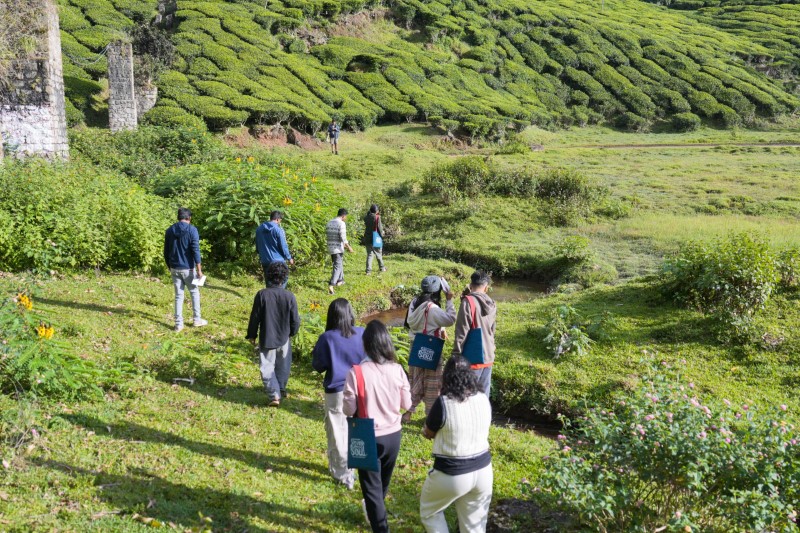
We started along the roadside, pausing to notice lichens and moss on the trees, the intricate patterns of fern leaves, and tiny beetles munching on green leaves. It was truly remarkable to see the guests’ initial perception of the whitish patches on trees as non-living transform into admiration for lichens, understanding their crucial role as living organisms. I tried to share stories about the small wonders we passed, but the constant honking of jeeps carrying tourists disrupted the flow.
We stumbled upon a patch of kurinji blooms (Strobilanthes pulneyensis) under the dappled light of roadside trees. While the mass blooming of Neelakurinji (Strobilanthes kunthiana), which paints the mountains blue every 12 years, is widely celebrated, there are many lesser-known native kurinji species in the Western Ghats. Excited to share this moment with the guests, I called them over and remarked about the beauty of its light purple flowers, the soft, hairy texture of its leaves, and the habitat of this plant, thriving under the shade. The guests seemed to connect with it deeply, finding a quiet parallel in their own relief under the tree's canopy from the harsh sun. In contrast, the invasives expanding their territory in open, unshaded areas stood as a glaring reminder of the imbalance in the ecosystem.
As we moved further along the trail, we reached a small stream meandering through the tea estate. Though the guests were intrigued by the story of the water striders in the stream, they shielded their faces from the harsh sunlight. We had barely walked 200 meters in an hour and began preparing to return. One guest remarked that they had expected a forested trail for the nature walk.
Caught off guard, I paused and said, "This is less of a nature walk and more of a walk of realization!" Though we laughed it off, the words lingered with me. As we walked back, my mind painted vivid images of the wild landscape Munnar once was—Nilgiri Tahrs grazing on montane grasslands dotted with orchids, impatiens, and other native flora; a male White-bellied Sholakili performing an impressive mating dance on a moss-covered branch in the dense shola forests; a Large-scaled Pit Viper in ambush near a sparkling evergreen forest stream. One image after another flashed before me, etching a deeper sense of loss in my mind.
This majestic shola ecosystem, which evolved over millions of years, has now been reduced to small fragments—standing as enduring testimonies, refusing to bow down to the tea estates and exotic garden flora that emerged in the mid-19th century as colonial imprints.
This walk was not about marvelling at an untouched forest. It was about understanding what remains, acknowledging the cost of what has been lost, and finding beauty in the resilience of life that persists despite it all. It is not that I was not aware of this before—the ways humans have altered landscapes and disrupted nature’s balance. But walks like this reaffirm the importance of reflecting on these truths. They serve as a gentle nudge to slow down, pay attention, stay curious, and deeply appreciate the intricate web of life.
In doing so, we reconnect with the essence of the wild—and perhaps discover the true meaning of happiness.
-----
 Shared by Jyothis Thayil, Teach for Nature Fellow, Bengaluru