

My Nature Exploration and TFN Journey
Almost a year and a half ago, when I first came to Dantewada (South Bastar, Chhattisgarh) in 2023, my mind was in a state of turmoil. It's not that the turmoil has completely ended now, but it was much more intense back then. While I enjoyed looking at trees, plants, and birds, I didn't feel a deep connection. It wasn't like my gaze would linger on them. At that time, I was quite interested in philosophy, and I came across a quote from a philosopher that asked, "When you look at a tree, are you really seeing the tree?" (Or are you just lost in your own thoughts?)
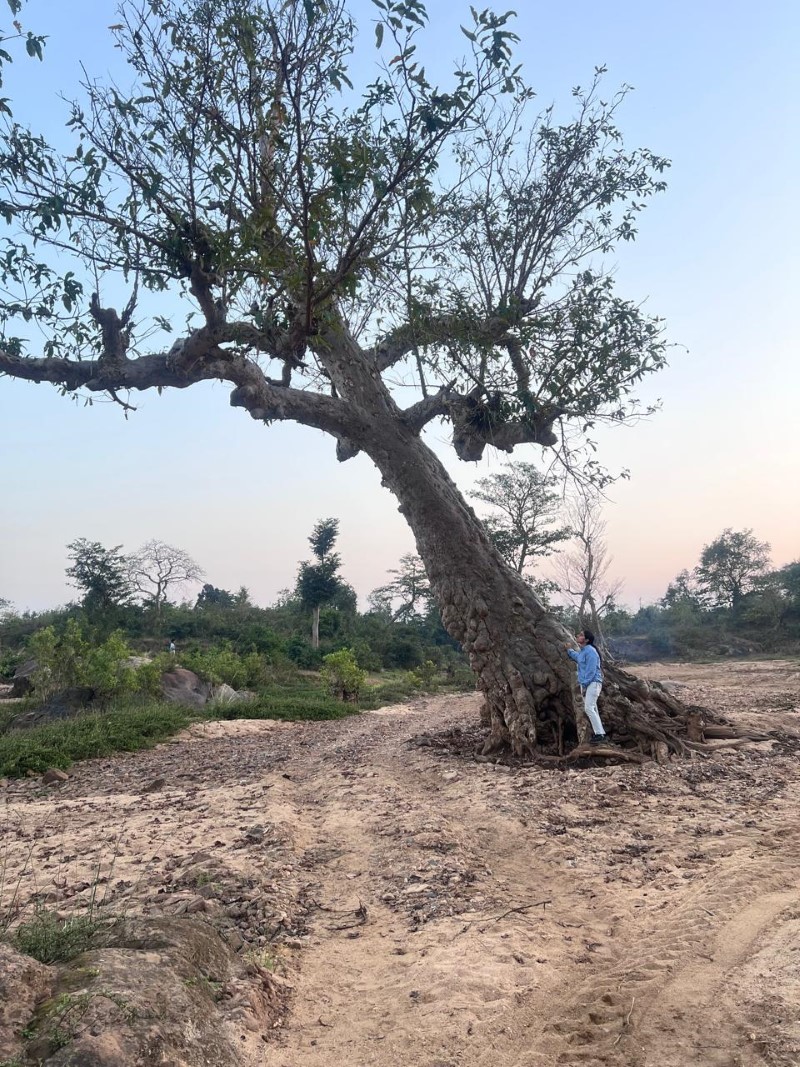
I decided to try this out, and the next day, when I woke up early to go for a walk, I looked at all the trees around me. It felt as if I was seeing a tree closely for the first time in a long while. My gaze lingered on the Mahua and Tendu trees. And then for about a month, every morning, as I walked along the same path, I looked at those same trees again and again. I realised that to truly see something and to be fully present in that moment, two kinds of stillness are required: one, a stillness of the mouth (silence), and two, an inner stillness where you try to reduce the flow of past and future thoughts that constantly run through our minds. This is quite difficult, but when you settle into that moment, just observing the twisted branches of a tree, the world of insects on the countless cracks of its trunk, the ants going in and out of their home, the amazing height of termite mounds, the harmony between a cattle egret and a cow, and the curiosity to understand the relationship between them, you feel a different kind of stillness. Your breath slows down, your footsteps become lighter, and slowly, you start to walk in the direction of this new world you've just encountered, a world that takes you on countless new journeys, just like the TFN journey has taken me, introducing me to new experiences every day. Sometimes I feel immense excitement, joy, and satisfaction, while other times I feel self-doubt, confusion, and a lack of knowledge. And sometimes, days just pass by normally, without feeling much different because there's so much happening so quickly.
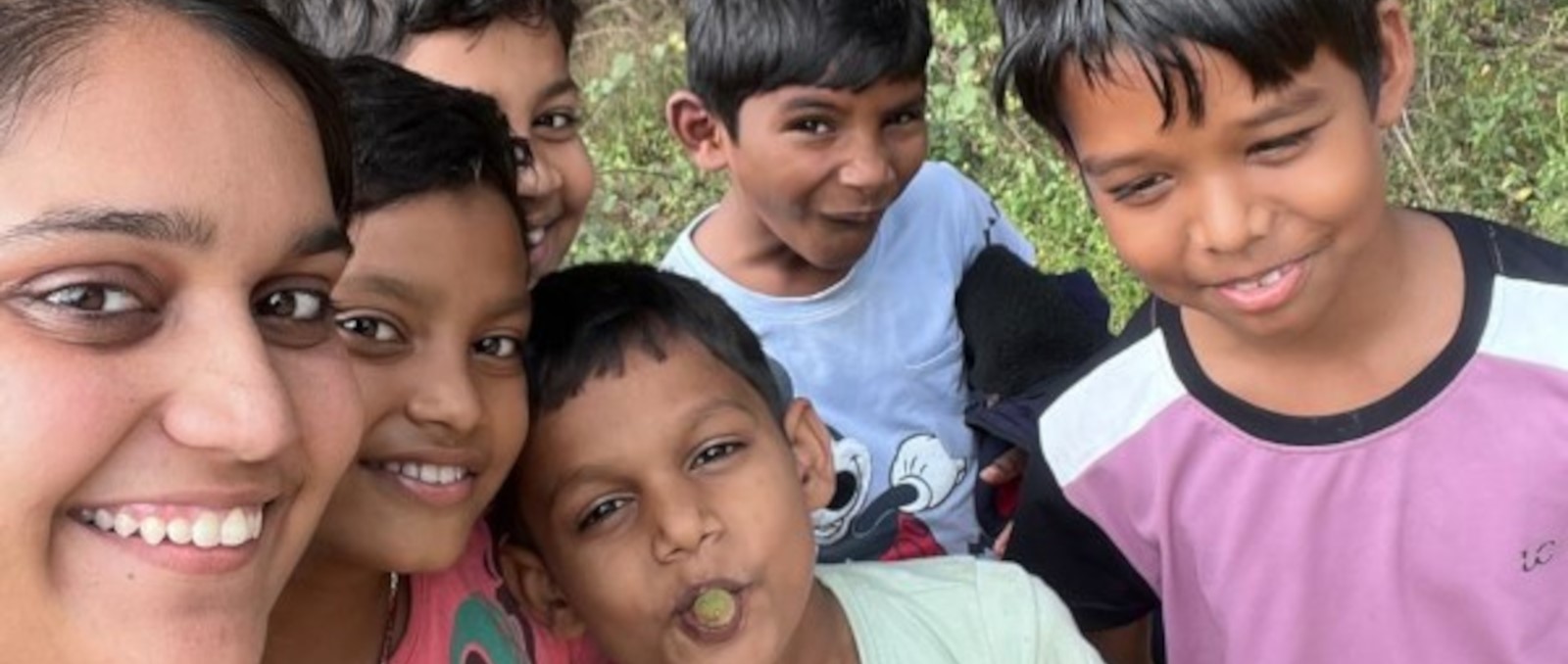
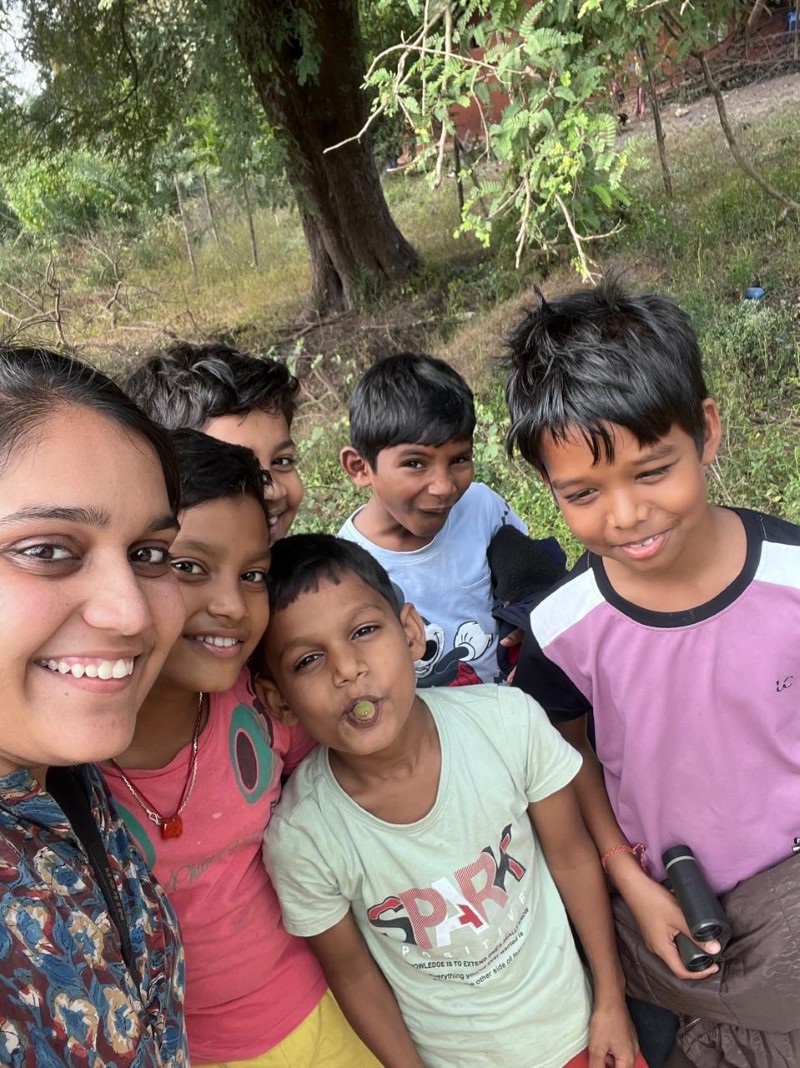
Sometimes I have really beautiful days when certain moments touch my heart, like when children see a bird through binoculars for the first time, the sparkle in their eyes, the thrill and curiosity to use it again and again to see everything around them. Or when they are so engrossed in drawing that they don't even realise how two hours have passed. And once, on a Sunday morning, when five neighbourhood children and I went for a walk to a nearby pond, and it took us 2.5 hours to cover just half a kilometre because they had so much to see and hear along the way, they used the hand lens and binoculars to their heart's content that day.
And then when one child asked me, "Didi, you have this every day, right? So you can see so much every day," I suddenly saw the binoculars in a whole new light.
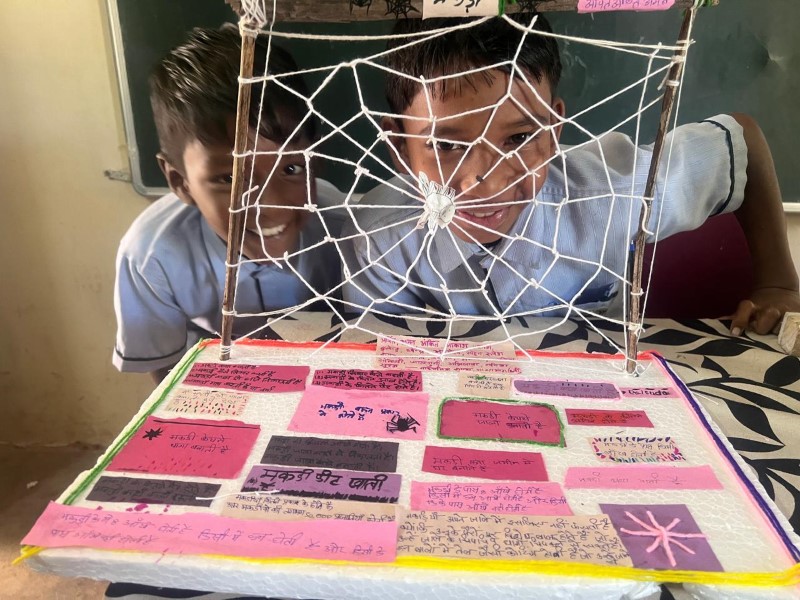
On some days, I find myself overthinking about how a topic or lesson plan will go, and I'm completely surprised to see how the children take the topic in a completely different and interesting direction, giving me new perspectives, asking many questions, sharing stories, and realising that as a facilitator, your role keeps shifting. Sometimes you're the centre of attention, guiding the entire class, and sometimes you're just the initiator of a topic, and then it flows on its own. But it's important to create a baseline in every session where feelings can be shared without fear, questions can be asked, and curiosity is respected.
Sometimes I feel very small when I'm just seen as an NGO person. Or sometimes, even when I want to, I have very limited authority to make decisions, and the power to make those decisions lies with someone in the system who doesn't understand the depth of the subject.
There are many sad things too, like seeing teachers yelling at children, children beating each other, stuffed, dim-lighted, suffocating, and not properly ventilated classrooms and hostels, and words like "backward" used to define tribal lifestyles. To understand such things, you have to understand the intricacies of the system, its many layers, and you cannot blame any one party because the roots of such problems are deep, and to understand them properly, you need to look at them from many perspectives.
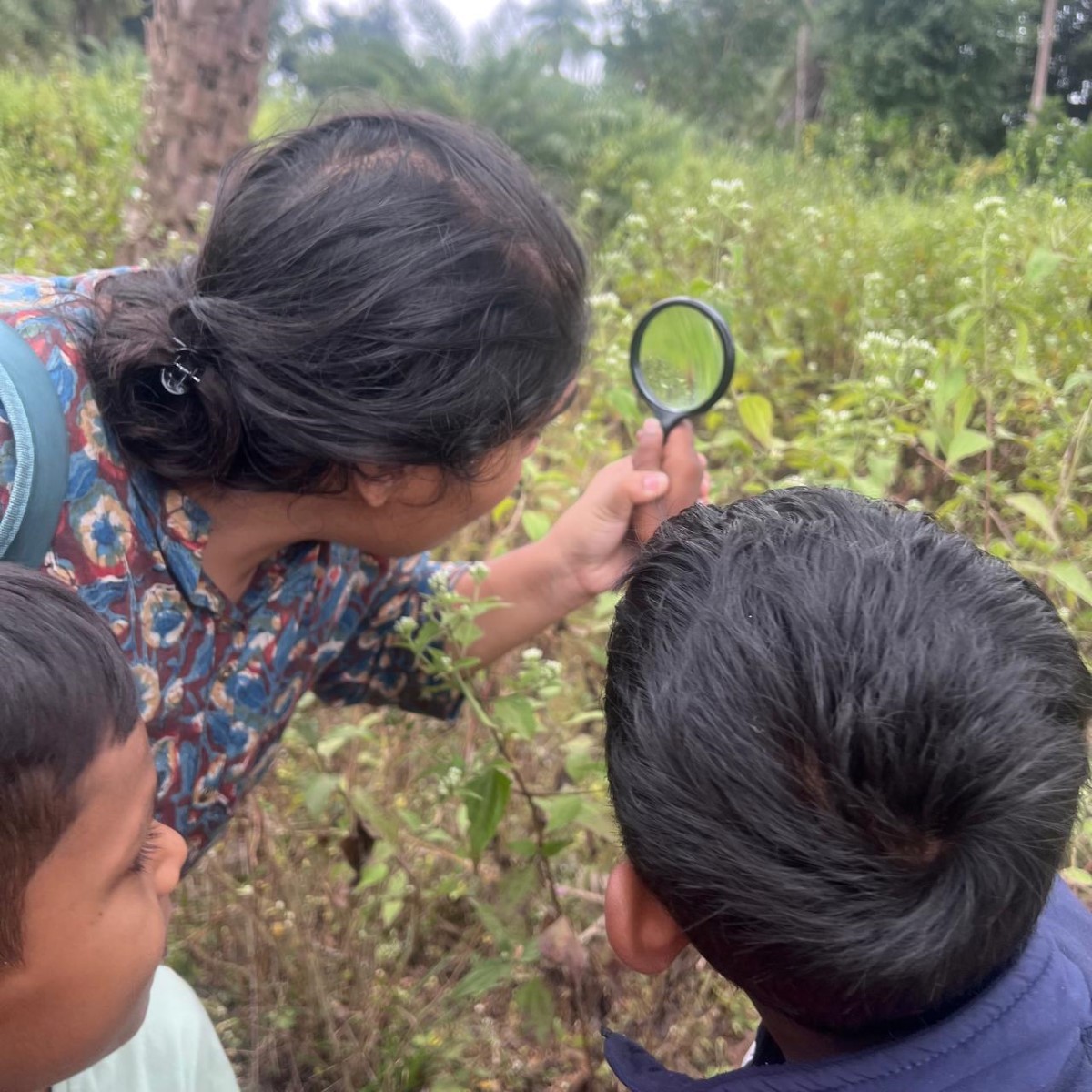
But even amidst all this, sometimes my heart fills with joy and excitement when some teachers, after being excited about birdwatching, start joining many of my sessions. And just last week, I was invited to a school picnic where we cooked, ate, danced, and played together.
Things take time, and it requires patience. It's also possible that those things may never happen. Again, believing in the process is helpful. Maybe we're just waiting to create a small 'dent' somewhere, which could potentially create a ripple effect.
My faith in this process grows when I occasionally hear questions like, "Didi, where have you been all these days? Why didn't you come to class?" or "Didi, can we go for a walk to the pond this Sunday?"
So, I would like to invite you to reflect on this question- "Are you really looking at a tree when you are looking at a tree?"
Who knows, maybe a new journey starts for you too. Try it out. Thank you.
-----
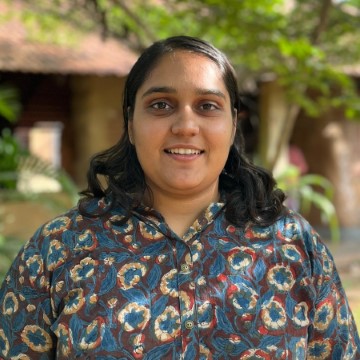 Shared by Himanshi, Teach for Nature Fellow, Chhattisgarh