
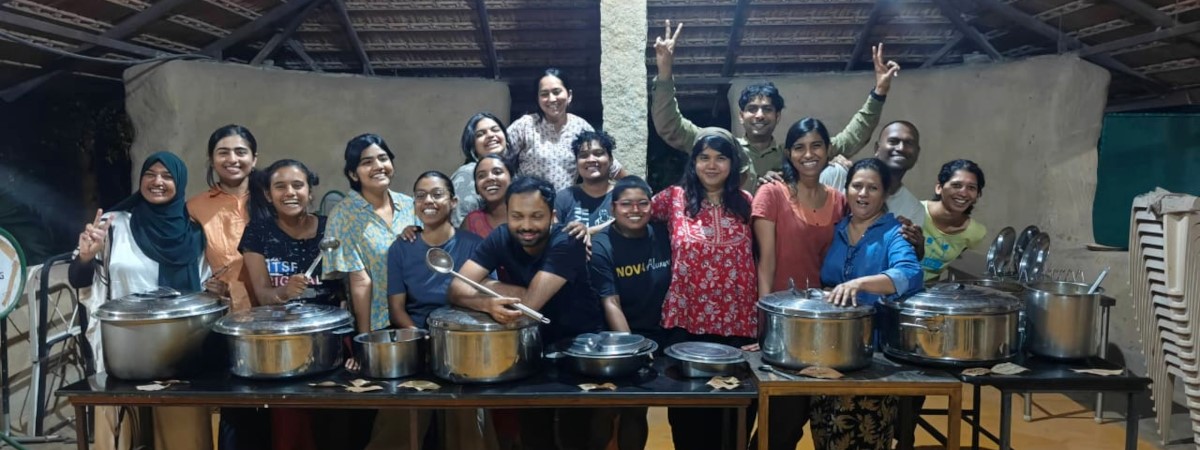

Food, Memory and Belonging
When I got to know that this week’s theme in our orientation programme was food, I found myself wondering, what is food? With this question in mind, I began the module.
The first thing the facilitators encouraged us to do was reflect on and express our relationship with food. For me, food is an act of self-love and an expression of joy and love. But growing up, that was not the case. I had a very difficult relationship with food because of societal beauty standards, and I often used it as an outlet for emotional pain. It took a lot of unlearning and help to build the relationship with food that I have today.
I also got the opportunity to conduct a fellow-led session on forgotten greens. I went to the garden at Bhoomi College to see whether I could still recognise any of the greens I used to forage as a child. That walk through the garden brought back memories of my experiences with various wild greens that people now dismiss as weeds. Seeing those edible greens filled me with emotion and nostalgia.
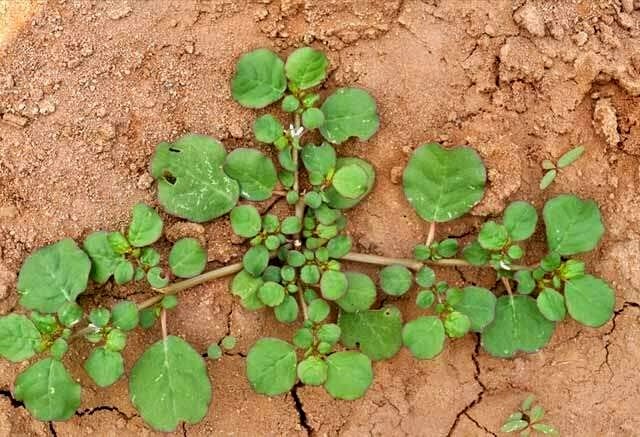
One memory I cherish to this day is foraging for an edible green called mookirattai keerai (paacha keerai) after the first monsoon rain. Everyone in my family would go to our sorghum field to collect these greens when they were still in the tender three- to four-leaf stage. The most exciting part of this ritual was the dish my grandmother used to prepare with the greens, which we would eat with ragi kali. While cherishing these memories, I realised how much my connection with food and plants has changed since moving to the city. I was left with a deep longing to reconnect with my roots.
After this, we moved to a session on tracing our food. That day, we had sambar for lunch and tried to understand what it takes for one of its ingredients, Toor dal, to reach our plate. I learnt about the cultural and environmental importance of this crop. I was amazed to discover that toor dal acts as a nitrogen fixer in the soil, is drought-resistant, and remains one of the most dependable crops for farmers. Beyond providing sustenance, it is also culturally significant. In parts of Maharashtra, farmers celebrate the first harvest by cooking the tender pods together in a shared community space while exchanging stories. This activity made us understand many systems, relationships, and forms of labour involved in bringing a single crop to our plate.
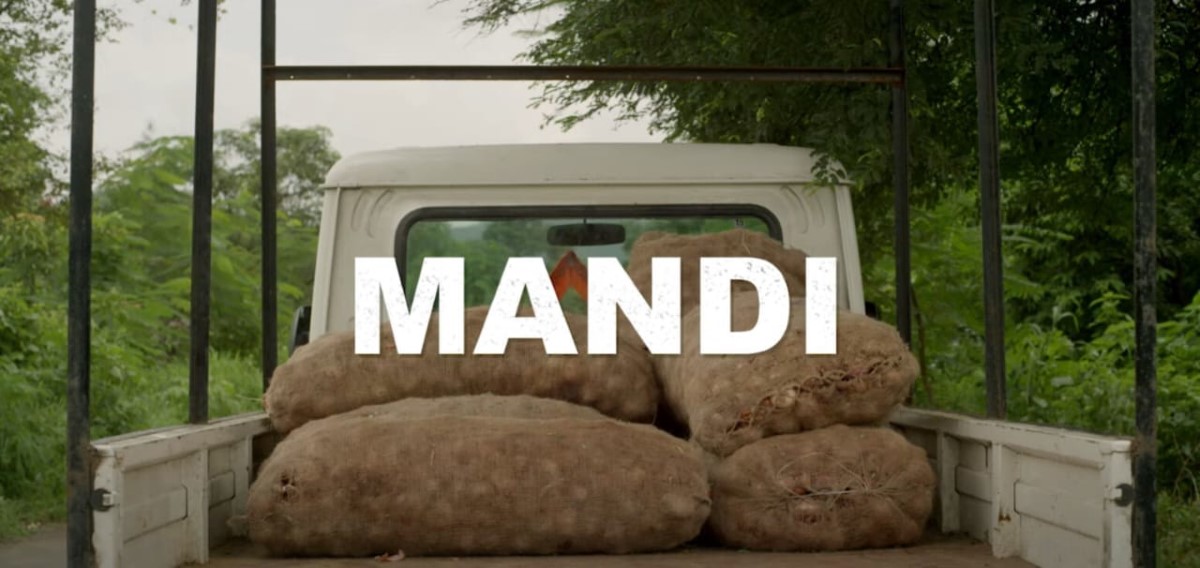
We watched a short film, Mandi, as part of the food module. This film impacted all of us and made me question the worldview of consumers, regulators and corporations that make us so oblivious to the plight of the farming community, especially the marginalised farming communities in India. I don’t have a full understanding of this now, but I promised myself that I would not stay ignorant about this anymore.
At the end of the module, we visited the calorie exhibition at the Science Gallery. This visit impacted me in many ways. I learned from the exhibit that ragi is not native to India, and this shifted something within me because ragi feels so deeply connected to culture and identity. It made me reflect on the emotions we attach to plants and the narratives we create around native and invasive species.
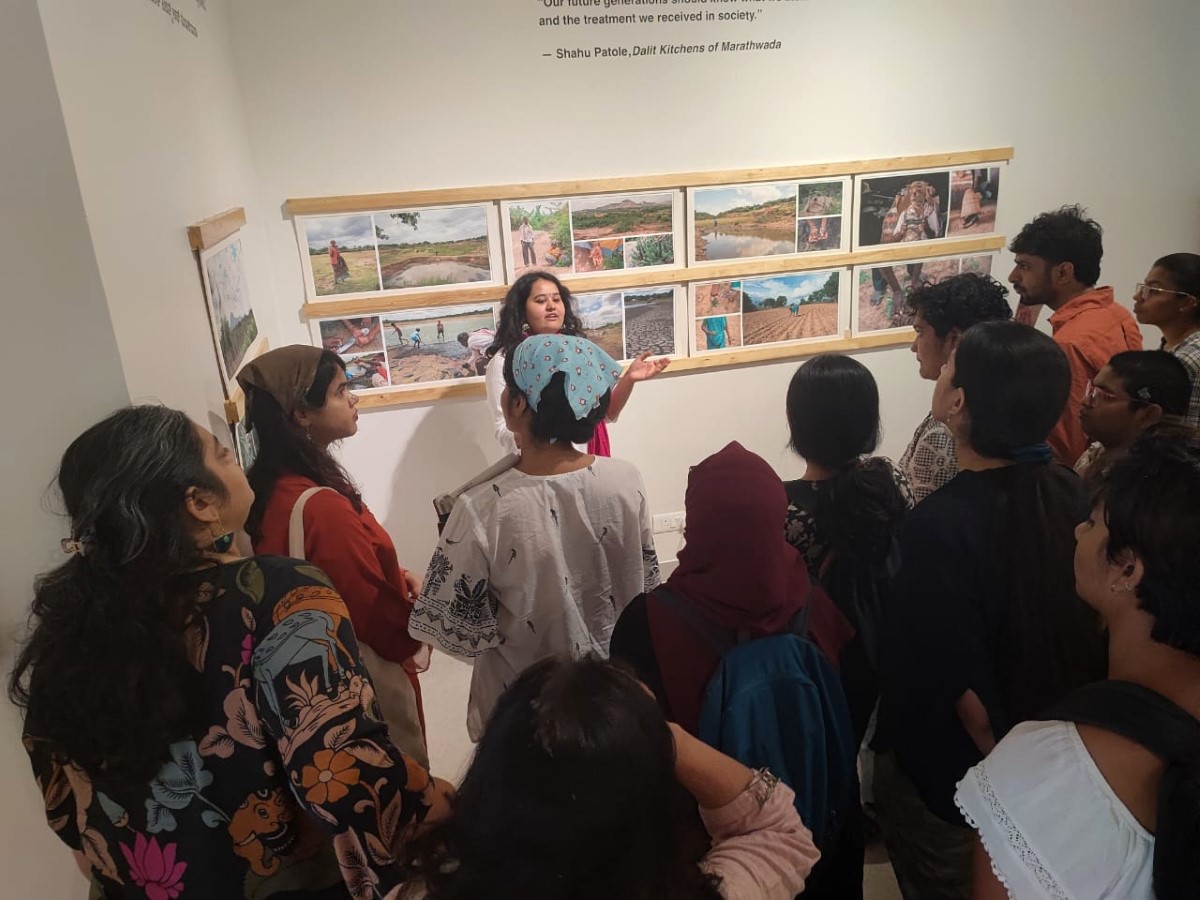
Throughout the exhibition, I came across different stories and relationships living beings have with food. It made me realise that food is not just fuel or nourishment for the body but so much more. Food is identity and culture. Food is politics. Food is love. Food is our relationship with nature. Food is all these things and so much more that we often fail to acknowledge.
-----
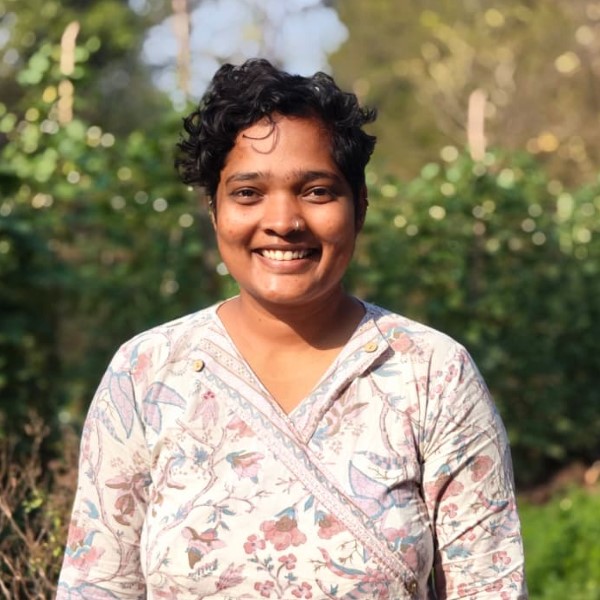 Shared by Priya Dharshni, Teach for Nature Fellow, 2026 Batch, Bangalore, Karnataka