

Rethinking School Landscapes Learning Through Lived Experience
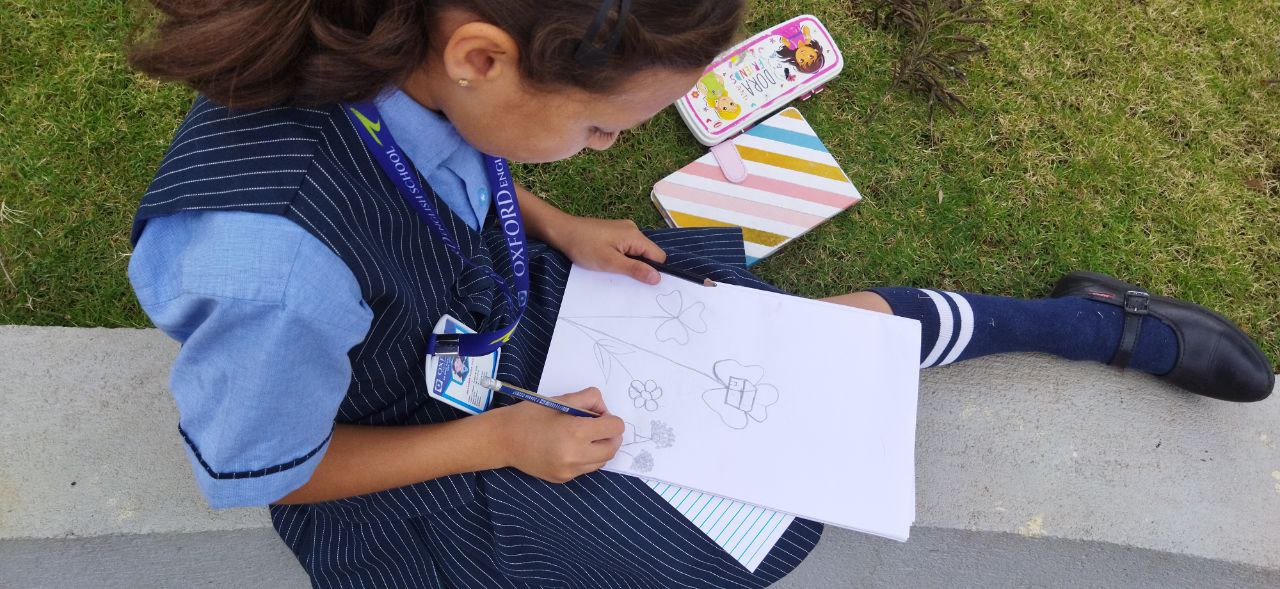
My school diary is filled with botanical pressings, a habit that caught the attention of my students one day. Their curiosity led to a session on creating botanical presses. However, many of them shared a common challenge: they did not have trees at home to explore or collect from.
This made me wonder what a truly immersive nature experience would feel like to a child living in a semi-urban setting, especially one whose family cannot afford vacations in the wild. Often, I find myself drifting away in a sea of questions:
Has wilderness, a place once open to all, become accessible only through money? And even then, would a week-long trip amidst nature equate to a lasting sense of belonging and bonding with the wild that a consistent-immersive experience could offer? As we face the rapid extinction of many species, most of which are undiscovered, will simply sharing facts about nature be enough to help our youth form a real connection to the land? Do they know they are connected to their land?
Then I tell myself to stay with it, to breathe.
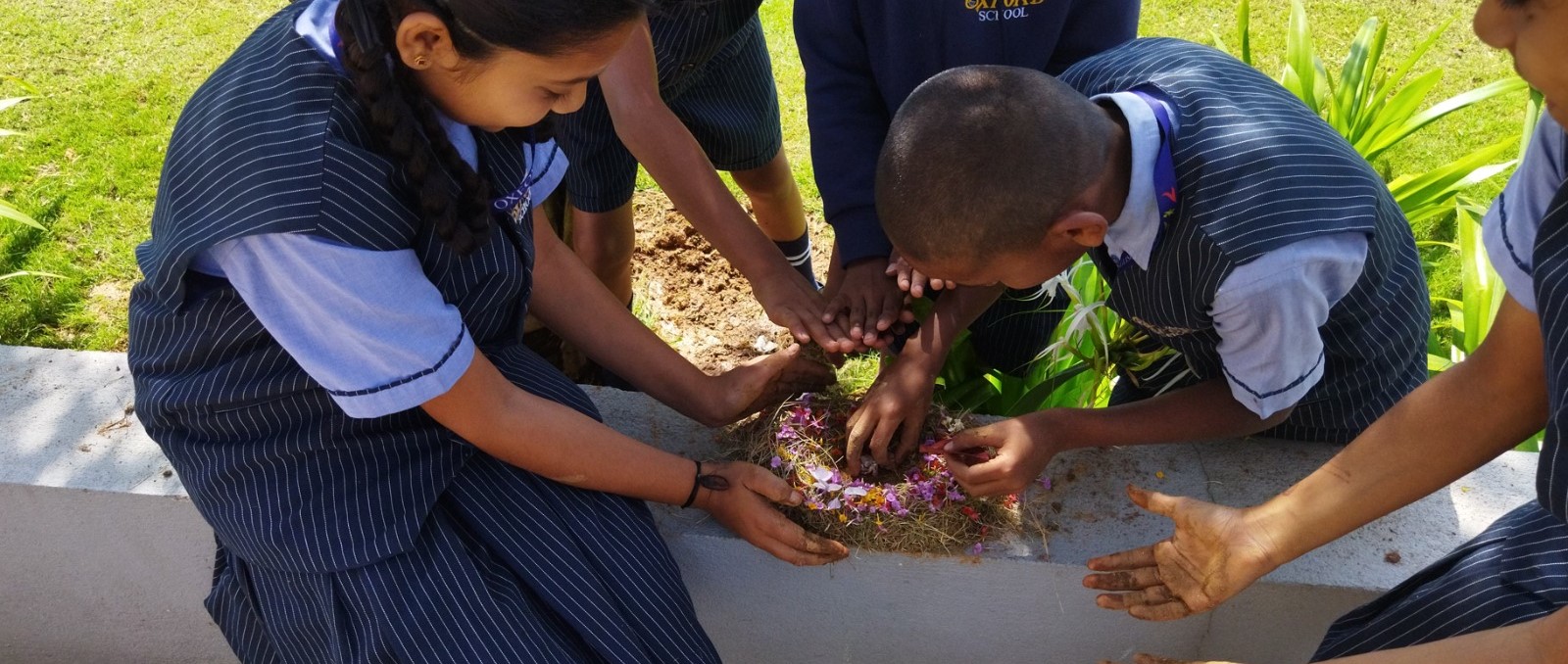
Facilitating the connection between the students and the rhythm of nature, the one which sustains life itself, is what I try to weave into my TFN sessions for the students. Rhythm though, must be experienced rather than explained. Much of this magic is beyond what we humans can fully comprehend, let alone teach. The beauty of it is lost in translation within the confines of a structured education system.
So, I dare myself to dream a future —a future where schools are not encased in concrete buildings, but instead exist under sprawling canopies of massive trees, each intertwined with others, no two alike. Where trees are not “neatly” spaced with manicured understory but rather exist as a delicate dance between plants, trees, ferns, and other to create a living systems orchestra. They would witness how nature thrives in response to the symphony of the elements: light, wind, water, soil, and forces unseen. The complexity of interdependence between different species to sustain the ecosystem shows how immensely beautiful and irreplaceable nature is. The magic of this living mosaic when experienced through our senses develops a profound reverence for the natural world; not as an abstract concept but as a lived experience.

Through my nature connect classes, I strive to bring as many elements of nature as possible into the classroom. For example, during a session on fungi, I brought real mushrooms collected from the wild for my students. They watched the documentary Fantastic Fungi and had the chance to observe the mushrooms directly. I encouraged them to engage their senses, experiencing the mushrooms through sight, touch, and smell.
I also take students outside to explore the school garden that has only tuff grass, ornamental flowers, and palm trees. Within this structured lawn, we find pockets of wonder—observing the nests of ants, termites, and other insects, or the small resilient plants growing between the trimmed grass. However, these fleeting moments are often interrupted by efforts to restore the garden's "perfection," where anything wild or untamed is swiftly removed.
The baseline of nature is rapidly shifting for children today, leaving them with little understanding of how undisturbed natural landscapes even look like. Sakleshpur, a coffee-growing town nestled in the Western Ghats range of Karnataka, is where I teach. One day during a session on "friends of trees" (ecosystem), I asked my students if they remember how the town looked like before coffee estates took over. They did not know. The richness of the evergreen forests and grasslands that once existed there has faded so completely from their memory that it’s no longer a part of their understanding or imagination.
The world they know is increasingly being defined by human intervention—replacing diverse forests with monoculture crops and conventional chemical-based agriculture, or swapping traditional mud houses with concrete structures, and more. These changes are happening so quickly that the young minds lack a vital reference point for nature-based systems and communities.

Climate change, global warming, and ecological loss, driven by issues like industrial manufacturing and resource extraction, are rarely discussed in schools. These overwhelming topics often cause students to disengage. To address this, I ground my sessions in place-based, local contexts, helping students see how these problems exist around us and how communities contribute to them. By acknowledging overlooked externalities, the entire class taps into their resilience and creativity to propose small, actionable solutions with broader impacts. For instance, replacing industrial products with locally made alternatives like natural surface cleaners and soaps or using local materials for building structures. Transforming schools into hubs that demonstrate these changes can inspire practical solutions to problems that may seem distant.
Not all hope is lost. I am encouraged to witness some well-designed schools where the space itself holds the potential to connect with nature; like Marudam Farm School in Tiruvannamalai, Hudlamane Government Higher Primary School near Sirsi, Prikriya Green Wisdom School in Bangalore, and others. Learning centres like Bhoomi College have enriching my understanding of nature education by connecting outer and inner ecology, adding a significant dimension to it. I carry the spirit of these spaces in my heart and share it as much as possible.
Building on this inspiration, I envision a world where my role as a nature connect facilitator is rendered redundant. Meanwhile, I work to transform schools into vibrant havens of wilderness with food forests, kitchen gardens, natural buildings and workshop studios for handicrafts. Such spaces would engage students not only as participants, but also as active contributors to building and sustaining the school’s essence. Hence, empowering the students to care for themselves, their community, and the planet.
-----
 Shared by Amruta Pujari, Sakleshpur, Karnataka